How to Choose a Sleeping Bag

Choosing a sleeping bag is not a single decision — it is a sequence of decisions that depend on each other. The right answer for a summer car camper in Georgia is completely wrong for a winter backpacker in Colorado. The starting questions are: what conditions will you sleep in, how cold do you personally sleep, what sleeping pad will you use, how much weight can you carry, and how wet will the insulation get? Answering those five questions before looking at any specific bag eliminates most wrong choices before they happen.

The most common mistake is selecting a bag by its headline temperature rating alone and ignoring pad R-value, individual physiology, bag cut, and insulation type. The second most common mistake is believing that a warmer bag automatically fixes a cold sleep problem, when inadequate pad insulation, wet insulation, poor fit, or low body heat output caused the problem in the first place.


What Generic Sleeping Bag Guides Usually Skip

Most buying guides explain that mummy bags are warmer, down is lighter, and you should match your bag's rating to the expected nighttime low. That is all true but incomplete. What they skip:

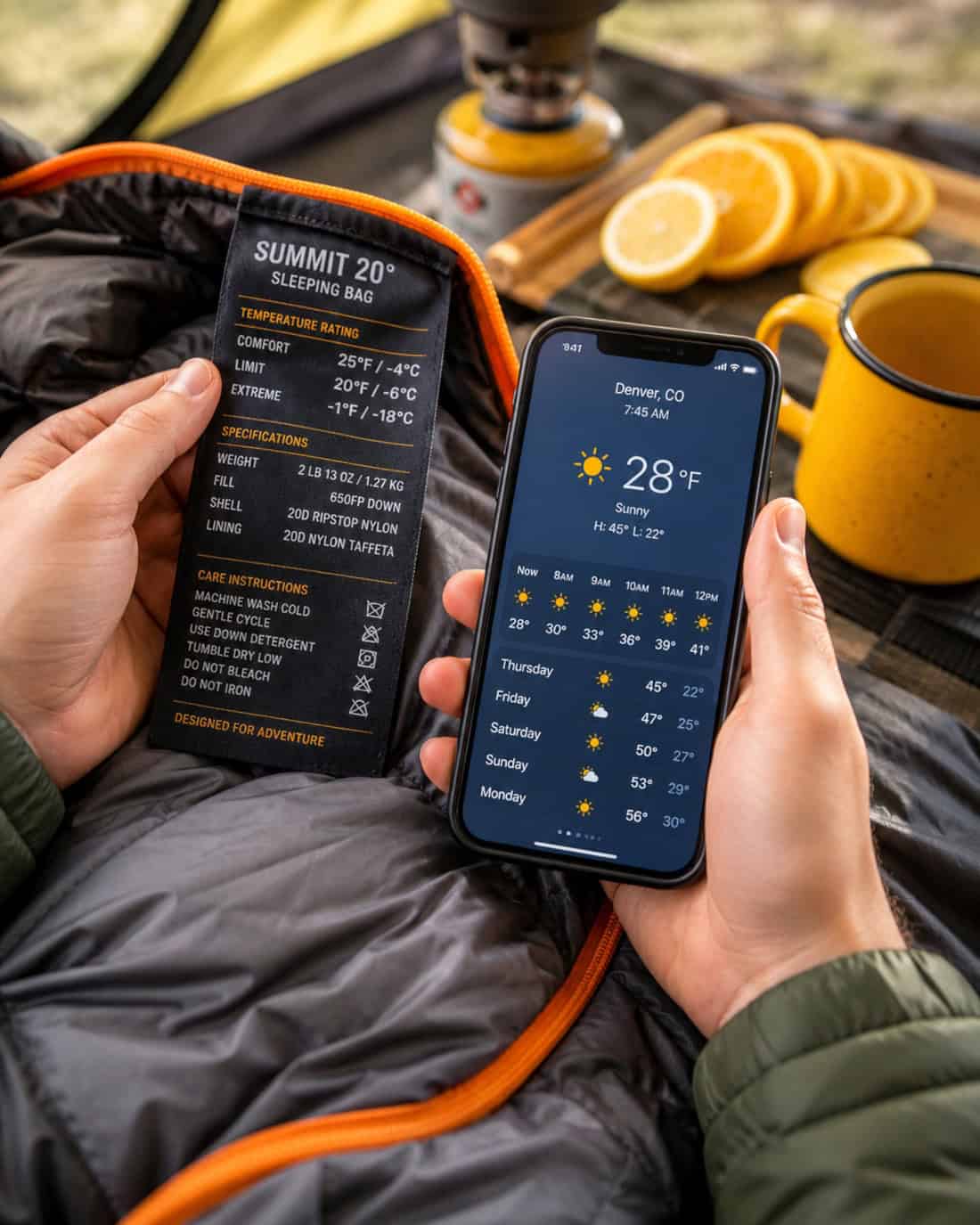
The ISO comfort and limit ratings use two different reference sleepers, and the difference between them is typically 10–15°F (5–8°C). A men's bag marketed as a "20°F bag" probably uses the limit rating, not the comfort rating. For a cold sleeper, that same bag might only feel comfortable at 30°F or warmer. A women's bag at the same label temperature typically uses the comfort rating and contains more insulation.

The ISO test runs on a sleeping pad with an R-value of 5.38. If your pad has an R-value of 2.0, the bag's rated warmth does not apply to your sleep system. Inadequate ground insulation is among the most common reasons a correctly-rated bag feels cold.

Product names rarely correspond consistently to ISO comfort or limit ratings. The REI Magma 15 is named for a temperature between its comfort (21°F) and limit (9°F) ratings. The Nemo Riff 15 has a limit rating of 17°F and a comfort rating of 28°F, making the name misleading even for a warm sleeper. Always check the actual ISO numbers, not just the model name.

Budget bags often hide performance tradeoffs in lower fill power, heavier fabrics, sewn-through baffles, or less precise temperature claims. A budget bag with no ISO certification cannot be reliably compared to any other bag.


The Core Decision: Matching Bag to Conditions, Pad, Body, and Trip

Before selecting a specific bag, establish four parameters:

Expected nighttime low. This is not the daytime low or the forecast average — it is the coldest temperature you might realistically encounter overnight, including weather variation. For mountain camping, include a margin of at least 5°C (9°F) below the forecast to account for weather changes, altitude drop in temperature (roughly 1–3°C per 300m of elevation gain), wind, and humidity. For backpacking in variable terrain, building in a 10°F comfort margin is not overcautious.

Pad R-value. Ground heat loss is significant. The ISO test uses a pad with R-5.38. If your pad is rated R-2 (a common uninsulated air pad), your sleep system will be substantially colder than the bag's label implies. Match pad and bag together, not bag to air temperature alone. For three-season backpacking, R-3 to R-4 is a reasonable minimum. For winter camping, R-5 or higher is necessary to achieve the warmth the bag claims.

Your personal sleep temperature. ISO test subjects are standardized models. Real people vary by 10–20°F or more. If you always sleep cold — you're the person who adds blankets at home while others are comfortable — use the ISO comfort rating as your lower limit, not the limit rating. If you consistently sleep warm, you can use the limit rating and still feel fine. If you are unsure, default to the comfort rating.

Insulation exposure to moisture. If your camping involves repeated wet nights, condensation in a non-breathable shelter, humid Pacific Northwest forests, or multi-day rain, the behavior of the insulation in damp conditions becomes a primary factor, not a secondary one.


Comfort, Limit, and Extreme: What the ISO Ratings Actually Measure

ISO 23537 (formerly EN 13537) is the international standard that most reputable sleeping bag manufacturers use to assign temperature ratings. It is conducted using a heated electronic thermal manikin dressed in base layers and an insulating cap, placed inside the sleeping bag on a standardized insulating mat, in a climate-controlled chamber with a slight airflow of approximately 1 km/h. The manikin cannot simulate metabolism, tossing, caloric state, or hydration — it is a controlled heat-loss measurement device, not a simulation of human sleep.

The standard produces four ratings. The upper limit is the temperature at which a standard male can sleep without excessive perspiration, with the hood and zipper open; it is rarely displayed on product labels. The comfort rating is the temperature at which a standard female can sleep comfortably in a relaxed position without feeling cold. The limit rating (also called lower limit) is the lowest temperature at which a standard male can sleep eight hours in a curled position without waking from cold. The extreme rating is the minimum temperature at which a standard female can remain for six hours without risk of death from hypothermia — this is a survival number, not a sleep number.

The difference between comfort and limit is typically 10–15°F (5–8°C). In practical terms, a cold sleeper using a bag labeled by its limit rating will feel cold at the labeled temperature. The extreme rating is irrelevant for purchasing decisions; using a bag at its extreme rating means tolerating a strong sensation of cold with a real risk of hypothermia.

Men's bags are typically labeled by the limit rating; women's bags by the comfort rating. This means a women's bag and a men's bag labeled at the same temperature will perform differently — the women's bag is genuinely warmer because it targets the comfort threshold. If you are a cold-sleeping male, the women's version of the same bag is a legitimate choice that simply contains more down and costs a bit more.

ISO ratings allow reliable comparison between bags from different brands tested under the same protocol. They do not guarantee your personal experience. Variations in metabolism, age, fitness, caloric intake, hydration, humidity, wind, ground temperature, shelter type, and sleeping position all shift real-world warmth up or down from the rated figure.

Rating What It Measures Who Should Use It
Comfort Avg. female, relaxed posture, not cold Cold sleepers, women, safety-margin buyers
Limit Avg. male, curled posture, not cold Warm sleepers, lightweight-focused buyers
Extreme Avg. female, survival only Not a buying target
Manufacturer label (no ISO) Brand's own method Not reliably comparable

Not every sleeping bag carries an ISO rating. The standard is not valid for extreme-expedition bags or for children's bags. Budget bags from less technical brands frequently carry manufacturer temperature claims that have no independent verification. ISO certification is a minimum requirement for any purchase where warmth margin matters.


The Sleeping Pad Is Half the Sleep System

The ground draws heat out of the body far faster than cold air does. Conductive heat loss through the floor is not addressed by the sleeping bag at all — it is addressed entirely by the sleeping pad. The sleeping bag wraps and insulates the top, sides, and bottom of your body in an air gap between you and the ground, but the compression of insulation under body weight largely neutralizes the bag's bottom insulation. The pad is the only effective insulation between your body and the ground.

Pad thermal resistance is measured by R-value, a dimensionless number expressing resistance to heat flow per unit area. Higher R-value means more resistance to heat loss. Since 2020, most major sleeping pad manufacturers have adopted the ASTM F3340-18 testing standard, which uses a cold plate under the pad and a warm plate on top, measures the energy required to maintain the warm plate's temperature, and assigns an R-value accordingly. This standardization allows direct comparison between pads from different manufacturers — before this standard, brands used different test methods and the numbers were not comparable.

The ISO sleeping bag test assumes a pad R-value of approximately 5.38. Using a lower-rated pad effectively reduces the warmth of the sleep system below what the bag's label implies. A rough field estimate: using a pad with R-2 instead of R-5 can reduce effective sleep-system warmth by 10–15°F (5–8°C) depending on ground temperature. In cold weather, using two stacked pads — a closed-cell foam pad under an inflatable pad — adds the R-values together and can substantially increase warmth without adding as much cost or weight as upgrading to a warmer bag.

Condition Minimum Pad R-Value
Summer (above 15°C / 59°F nights) R-1.5 to R-2
Three-season (down to 0°C / 32°F) R-3 to R-4
Early winter, shoulder season R-4 to R-5
Winter backpacking (below -10°C / 14°F) R-5 to R-7+
Extended cold-weather expedition R-7 and above

Internal air circulation in high-volume inflatable pads can reduce effective warmth compared to the static R-value test. Convection moves warm air away from the body as the sleeper shifts position. Closed-cell foam pads have no air movement and their R-value is stable. High-quality inflatable pads with internal baffles reduce convective loss. The ASTM test does not capture this dynamic, so real-world warmth can fall below rated values on large-volume air pads.


Down, Synthetic, Hydrophobic, Recycled: What the Insulation Actually Does

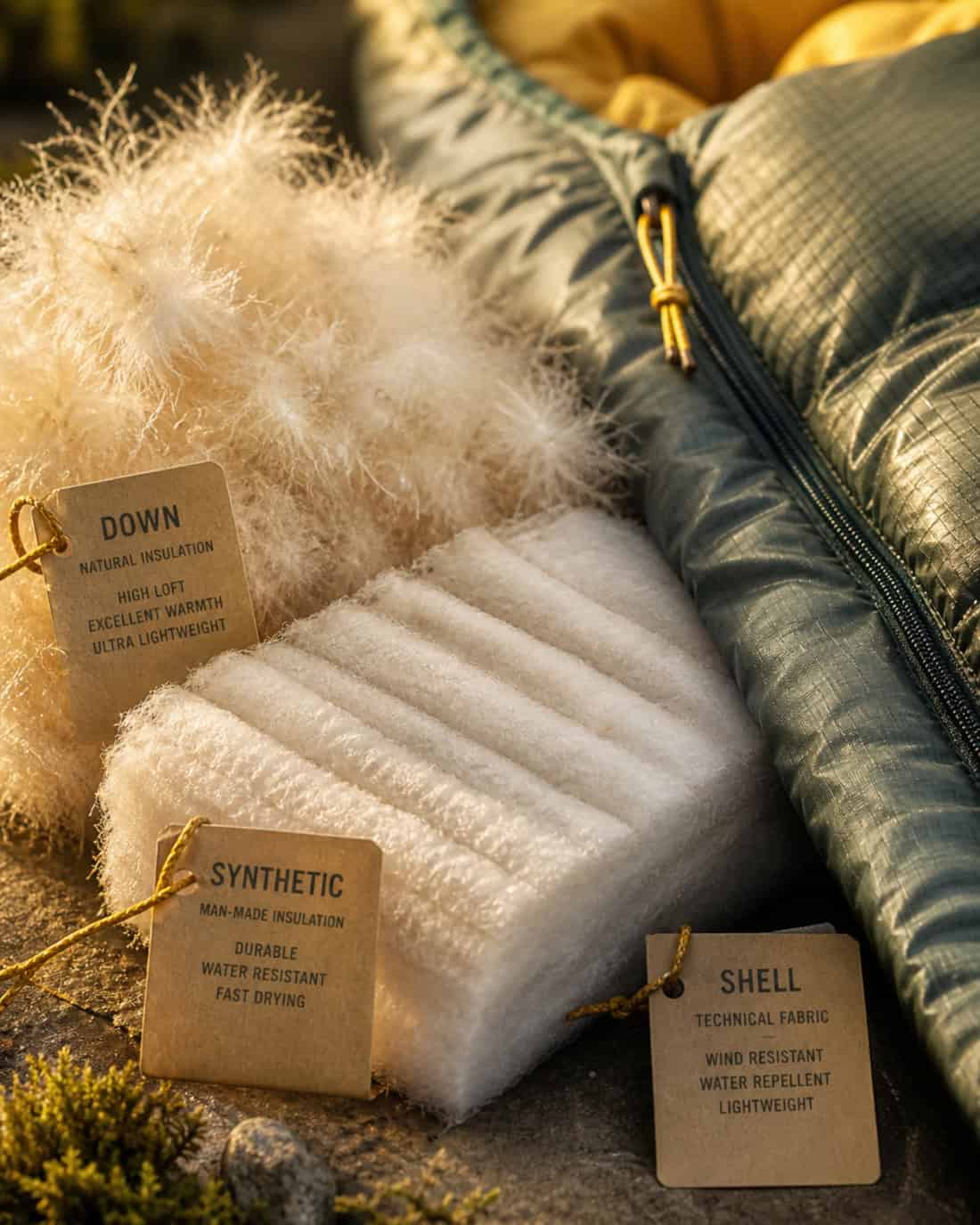
Down insulation traps body-warmed air in a three-dimensional structure of interlocking filaments called plumules. Each cluster of down contains thousands of fibers that form a lattice of air pockets. The loft of the down — its ability to expand and hold volume — directly determines how much air is trapped. Down's extraordinary warmth-to-weight ratio comes from this high volume of air per gram of insulation. Down with full loft also compresses well: the same filaments that spring back to full volume after compression make high-fill-power down highly packable. When dry and clean, premium down is unmatched by any synthetic fill in warmth per gram and warmth per unit of packed volume.

The critical failure mode of down is moisture. When water contacts down filaments, the structure collapses, loft disappears, and insulating ability drops sharply. A completely saturated down bag can lose the majority of its thermal resistance. Even partial dampness from perspiration, condensation, or humidity-driven moisture absorption degrades loft measurably over several consecutive nights.

Hydrophobic down is down treated with a durable water-repellent (DWR) polymer coating applied to the individual filaments. The treatment delays moisture absorption and allows damp down to recover loft more quickly than untreated down. A well-treated hydrophobic down can retain significantly more loft in the first few hours of light moisture contact — figures of 30–60% better loft retention in short-duration moisture exposure are reported by manufacturers. However, hydrophobic treatment does not waterproof down and its benefit diminishes with extended, sustained wet exposure. If the bag shell becomes saturated, or if the sleeper is soaked and directly compressing the down, hydrophobic treatment provides limited protection. The treatment is a meaningful upgrade for occasional dampness and condensation, not a solution for persistently wet camping. DWR treatments also degrade with washing and compression cycles, and cannot be fully restored at home to factory standard.

Synthetic insulation consists of polyester fibers engineered to create trapped air pockets similar to down. The critical difference is that synthetic fibers do not collapse when wet. A soaked synthetic bag retains a meaningful fraction of its insulating ability and dries far faster than down. This is the decisive advantage of synthetic in sustained wet conditions. Synthetic insulation also costs significantly less, requires less careful care, and is appropriate for users who may not dry gear properly between trips.

The significant disadvantage of synthetic fill is warmth per unit of weight and volume. Achieving the same ISO rating with synthetic insulation requires more fill weight, and the bag ends up heavier and larger than its down equivalent. The difference is not trivial at the colder end of the range: a 0°F synthetic bag can weigh 30–50% more than a 0°F down bag of comparable quality.

Synthetic insulation also degrades faster. Polyester fibers break down with repeated compression, and loft loss is irreversible. A synthetic bag used regularly loses noticeable warmth over five to eight years of use. A quality down bag, if stored uncompressed, washed carefully, and kept dry, can maintain its loft for decades.

Modern continuous-filament synthetic fills such as PrimaLoft Gold and similar products have higher compressibility and better warmth-to-weight ratios than older short-staple synthetics, narrowing the gap with down at lighter temperature ratings. At 40°F or 30°F limit ratings, high-quality synthetic is a practical alternative to down for wet-climate use.

Recycled down is harvested from discarded consumer products, sorted, cleaned, and certified for quality and fill power. It performs the same as virgin down of equivalent fill power and allows buyers to avoid the animal welfare questions attached to new down sourcing.


Fill Power and Fill Weight: The Two Numbers That Determine Warmth and Weight

Fill power measures the quality and loft efficiency of down. The number represents the cubic inches of volume that one ounce of that down occupies in a standardized compression test: one ounce of 800-fill-power down lofts to 800 cubic inches. Higher fill power means each ounce of down traps more air, which means the same warmth can be achieved with less down by weight. The practical consequence is that a higher-fill-power bag achieving the same temperature rating will be lighter and pack smaller than a lower-fill-power bag.

Fill weight is the total mass of down inside the bag, measured in ounces or grams. This is the quantity of insulation. Fill power is quality; fill weight is quantity. A bag with 800-fill-power down but only 12 oz of fill can be substantially less warm than a bag with 650-fill-power down and 20 oz of fill. Both numbers are necessary to understand warmth. Fill power alone tells you nothing about how warm a specific bag will be.

Fill Power Practical Description
300–500 Budget bags, immature clusters, poor compression
550–650 Entry-level backpacking and camping; heavier than premium
650–750 Mid-range performance; good warmth-to-weight ratio
800–850 Premium; excellent compression, lighter for rating
850–950+ Expedition and ultralight; highest warmth per gram, highest cost

The warmth gains from moving from 650 to 700 fill power are meaningful for backpackers counting grams. The gains from moving from 850 to 950 fill power are marginal in the field and primarily relevant for extreme-weight-reduction scenarios like ultralight thru-hiking or alpine climbing. Above 900 fill power, real-world performance differences become difficult to detect, and cost escalates sharply.

Budget bags often claim the same temperature rating as premium bags but achieve it with more fill weight of lower-quality down, resulting in a bag that is heavier, bulkier, and often less accurately rated. A 20°F bag using 600-fill-power down and a 20°F bag using 850-fill-power down may feel similar on a mild night but will differ noticeably in pack weight and volume over a season of backpacking.


Bag Shape, Dead-Air Volume, and the Thermal Geometry of Fit

A sleeping bag warms the air trapped between your body and the shell. Your body heats that air; the insulation slows the rate at which that heat escapes. Two geometry factors determine efficiency: how much air needs to be heated, and how well the shell conforms to the body to minimize the volume.

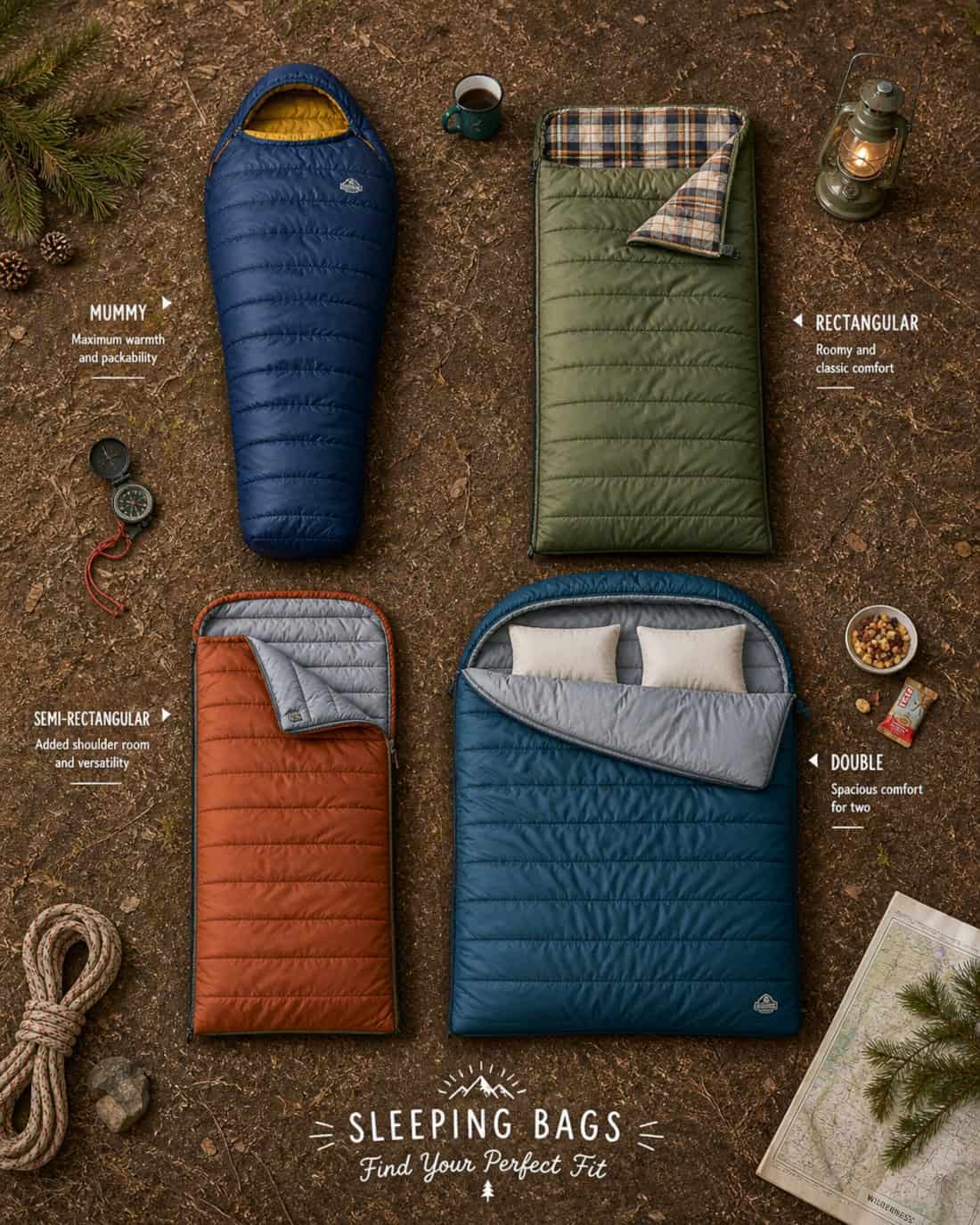
Mummy bags taper from the shoulders to the feet, closely following body contours. This reduces dead-air volume — the unoccupied space the body must heat — which increases thermal efficiency. A mummy bag also typically includes a contoured hood that wraps around the head, a critical site of heat loss. For backpacking and any camping in cold conditions, the mummy is the most thermally efficient shape. The tradeoff is restricted movement. Side sleepers and restless sleepers often feel confined, and rolling over requires rotating the entire bag with the body.

Semi-rectangular bags (also called modified mummy or relaxed mummy) maintain a tapered footbox but add width at the shoulders and hips. This gives more movement freedom and better accommodates side sleepers and broad-shouldered users without fully abandoning thermal efficiency. For three-season backpacking by users who dislike the mummy feel, this is the practical compromise.

Rectangular bags have uniform width from shoulders to feet. They offer the most freedom of movement and work well for car camping, family use, and warm-weather sleeping. They are heavier and less thermally efficient than mummy bags at equivalent ratings because they contain more dead-air volume. They can be unzipped and used as quilts, and two compatible rectangular bags can zip together into a double. For trips where weight and pack size are not constraints, the rectangular bag provides the most home-like sleeping experience.

Spoon-shaped bags widen significantly in the hip and knee area, allowing side sleepers to bend their knees without feeling trapped. Nemo Equipment's Spoon series is the best-known example. These bags weigh slightly more than standard mummy bags and are designed specifically for sleepers who find the mummy footbox constricting.

Quilts eliminate the bottom panel entirely. The top panel and footbox provide insulation; the pad provides ground insulation. This removes the compressed, largely non-functional insulation under the body, reducing weight and pack volume. Quilts are cooler in warm weather because venting requires simply lifting a side rather than managing a zipper. Most quilts include straps, clips, or pad sleeves to hold the edges against the pad and minimize drafts. The primary challenge with quilts is draft management: if the edges gap away from the pad, cold air enters. They require slightly more practice than sleeping bags and suit users who sleep relatively still or who have mastered quilt management. For three-season backpacking in dry conditions, a well-fitted quilt can be lighter and more comfortable than a mummy bag for the same temperature performance.

Shoulder girth, hip girth, and footbox volume are the specific numbers that determine fit. Shoulder girth is the interior circumference of the bag at the shoulder level; hip girth at the hips; footbox volume is described by the interior circumference at the foot and the bag's overall footbox shape. A bag that is too narrow compresses insulation where body pressure contacts the shell — especially at the shoulders and hips for a side sleeper — reducing effective insulation at those points. A bag that is too wide increases dead-air volume, requiring the body to heat more air, and creates cold pockets that the body may not adequately warm.

Most mummy bags list shoulder girth between 56 and 64 inches. Broader-shouldered users or those who prefer to sleep on their side should seek bags at the wider end of this range or semi-rectangular designs. Tall users need to check stated length carefully; a bag too short for the user's height will press the footbox against the feet, compressing insulation directly over the toes and causing cold feet even in a warm bag.


Women's, Men's, Short, Long, and Wide Sizing

Women's sleeping bags differ from men's in three meaningful ways: they are typically shorter (fitting users to around 5'6" rather than 6'0"), they have more insulation concentrated in the footbox and torso, and they use the ISO comfort rating rather than the limit rating on labels. The combination of more fill weight and a comfort-based label means a women's 20°F bag is genuinely warmer than a men's 20°F bag. Cold-sleeping men who want to avoid purchasing a larger, heavier bag sometimes choose the women's version for a better warmth-to-weight tradeoff.

Short sizes fit users under 5'6" or 5'4" depending on brand. Regular sizes typically accommodate users to 6'0". Long sizes extend to 6'6" or beyond. Buying the wrong length wastes insulation at the foot end if too long, or compresses footbox insulation against the toes if too short. Wide sizes add shoulder and hip girth without lengthening the bag, benefiting broad-shouldered or larger-framed sleepers who would otherwise feel compressed in a standard mummy.

Children's bags should be sized for the child's actual body length, not anticipated growth. An adult bag around a child will leave excess air volume that the child's body cannot heat, producing cold sleep despite ostensibly adequate insulation.


Baffle Construction and How Down Is Contained

Baffles are the internal chambers that hold down in position and allow it to fully loft. Without baffles, down migrates toward one side of the bag under gravity or body movement, creating thin spots where heat loss accelerates.

Sewn-through (stitch-through) baffles connect the shell and liner directly, creating channels without vertical walls. This is the lightest and least expensive construction method. The drawback is that the seam itself contains no insulation, creating a cold line of heat loss at every baffle seam. For warm-weather bags rated above 40°F, this is acceptable. For bags rated below 32°F, sewn-through construction creates noticeable cold spots and should be considered a compromise.

Box-wall baffles use a separate strip of lightweight fabric sewn between the shell and liner, creating a true three-dimensional chamber. Down can fill the corners, and the seam lines alternate between inner and outer fabric so that no single seam penetrates the full insulation depth. This eliminates the cold spots of sewn-through construction. Box-wall construction is heavier than sewn-through but substantially warmer for equivalent fill weights.

Trapezoidal baffles use offset angled walls that further reduce the risk of down settling into corners and improve down distribution across the baffle. The angled walls provide better containment than standard box-wall construction. Criterion Sleeping Bags describes a 2–3°C warmth advantage over box-wall construction for the same fill weight. Trapezoidal construction is common in mid-range to premium three-season bags.

V-tube (vertical or diamond) baffles create the most thermally efficient chambers, with two angled walls forming a V or diamond cross-section. Down is contained most effectively in these shapes, reducing migration within each chamber. V-tube construction adds the most fabric weight and manufacturing cost and appears primarily in expedition-grade bags.

Shingle construction (used in synthetic bags) overlaps sheets of insulation like roof shingles to eliminate gaps at the attachment seams. This solves the sewn-through cold-spot problem for synthetic fill without requiring the complex chambering that down bags require.

Differential cut refers to making the outer shell circumference larger than the inner liner, creating the volume between shell and liner that allows down to loft fully. Without differential cut, the bag fits too tightly and the insulation is partially compressed even when no external pressure is applied.


Draft Control: Hood, Collar, Zipper, and Tube Design

Heat loss from the head and neck accounts for a significant fraction of total body heat loss during sleep. In any bag rated below 45°F, hood and collar design affects warmth more than most buyers expect.

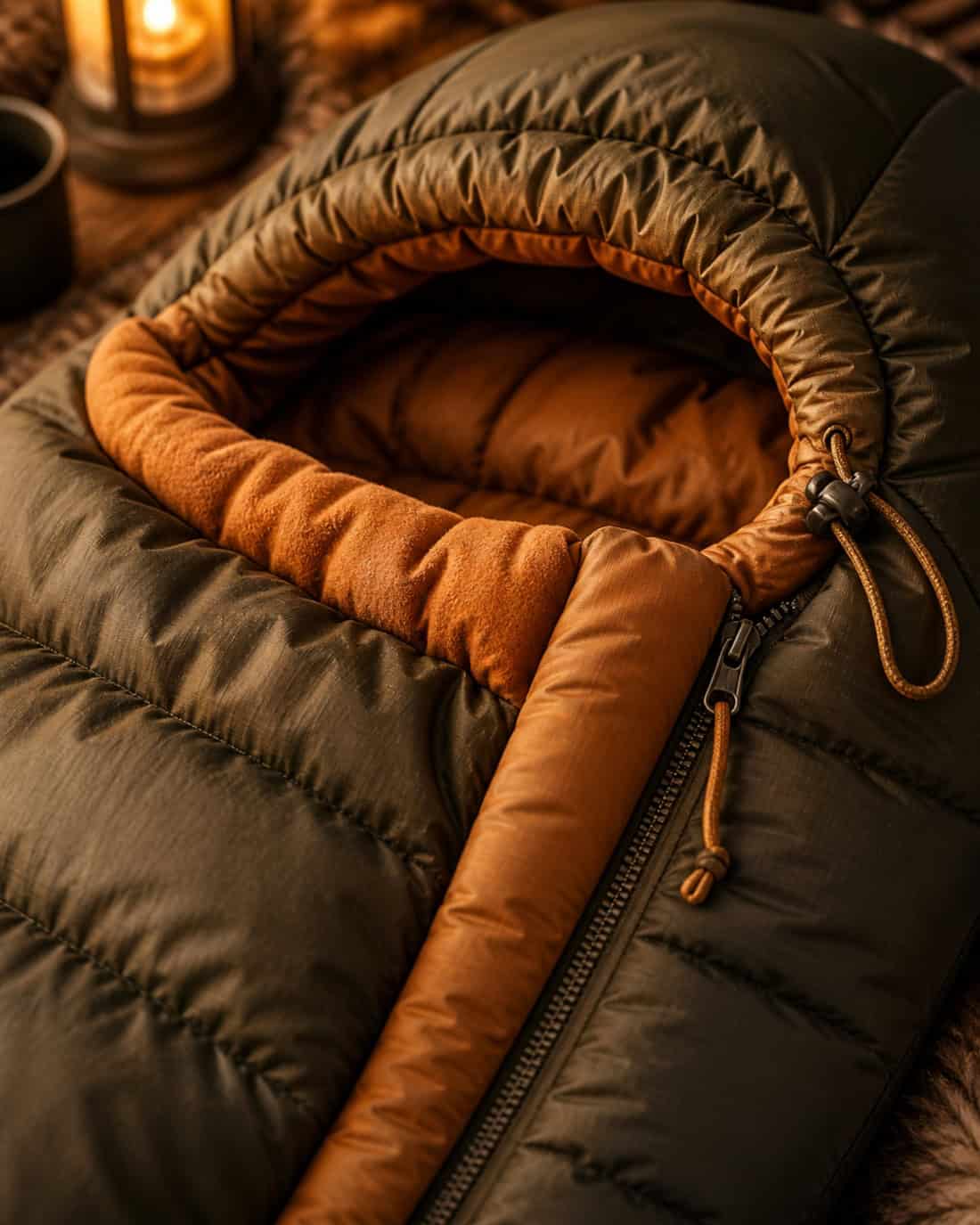
Hoods on mummy bags cinch around the face with a drawcord, sealing the head inside an insulated space. A well-fitted, fully cinched hood can add the equivalent of several degrees of effective warmth compared to the same bag without a hood or with a loose hood. For winter bags, the hood is indispensable. For summer bags, a hood adds weight and cost without meaningful benefit in warm conditions.

Draft collars are insulated tubes or baffles sewn at the shoulder level, inside the zipper line, that prevent warm air from escaping over the chest when the bag is cinched around the shoulders. Without a draft collar, warm air vents over the sleeping person's chest as they breathe and move, creating convective heat loss. Any bag rated below 32°F should have a well-filled draft collar.

Draft tubes run the length of the zipper on the inside of the bag, preventing cold air from entering through the zipper teeth. Budget bags sometimes omit the draft tube to save cost and weight; this creates a measurable cold line along the zipper side.

Zipper length determines venting ability. Full-length zippers allow the bag to open completely, enabling it to be used as a quilt in warmer conditions. Half-length zippers save weight and reduce cold-spot risk but eliminate the option to ventilate aggressively. Two-way zippers can be opened from the foot, allowing leg ventilation without disturbing the upper body seal. Left-hand or right-hand zipper preference is partly personal; many manufacturers offer both options, and two compatible bags can zip together if they have mirror-image zippers.


Shell and Liner Fabrics: Breathability, Durability, and Condensation

Sleeping bag shells and liners are typically nylon or polyester ripstop or plain weave fabrics. Denier (D) ratings indicate yarn weight and roughly correlate with durability. Lightweight technical bags use 10D to 20D nylon; backpacking bags commonly use 20D to 40D; car-camping bags use heavier 50D to 70D fabrics. Lower denier means less weight and more packability but greater susceptibility to snags and abrasion from camp debris, zipper edges, and rough sleeping surfaces.

Breathability matters more than many guides acknowledge. When the body generates moisture vapor through perspiration, that moisture must pass through the insulation and shell to prevent it from condensing inside the bag. Most sleeping bag shells are deliberately permeable to vapor because breathability prevents moisture accumulation in the insulation layer. Waterproof membranes in shells, used in bivy sacks and some expedition bags, trap moisture inside and must be managed through careful ventilation. For standard three-season use inside a tent, a breathable but non-waterproof shell is optimal.

DWR (durable water repellent) coatings on the shell prevent light moisture — tent condensation, splashing, damp grass — from wetting through the fabric and contacting the insulation. DWR wears off with use and washing. It can be partially restored by heat from a tumble dryer or by reapplication with a product such as Nikwax TX.Direct. PFC-free DWR formulations have replaced fluorocarbon-based coatings in most current bags, addressing the environmental concerns associated with PFAS chemicals.

The ISO test includes a simulated low airflow of approximately 1 km/h, which slightly penalizes highly air-permeable shell fabrics in the test result even though those fabrics may be more comfortable in practice due to superior breathability.


Activity and Trip Type: Matching the Bag to How You Use It

Summer car camping requires the least technical performance. A rectangular or semi-rectangular bag with a limit rating of 40–50°F, synthetic or low-fill-power down, and durable heavy fabric handles the task. Weight and pack size are not constraints, so comfort and durability take priority.

Three-season car camping benefits from a 25–35°F comfort rating to handle cooler shoulder-season nights. Synthetic fill is practical at this use level; 550–650 fill power down is also appropriate and packs better.

Three-season backpacking typically requires a limit rating of 20–30°F for most US mountain environments, though the right number depends heavily on elevation, region, and personal cold sensitivity. Down is the practical choice for weight and volume. Fill power of 650–800 balances performance and cost. Shoulder girth and footbox dimensions matter more here than in car camping because discomfort during sleep compounds across multiple consecutive nights.

Ultralight backpacking and thru-hiking prioritizes total sleep system weight. Quilts are common at this level for their weight and ventilation advantages. High fill-power down (800+) in a close-fitting mummy or quilt with a conservative temperature rating and a lightweight R-3 to R-4 pad is the typical setup. The tradeoffs are cost, moisture vulnerability, and the learning curve of quilt draft management.

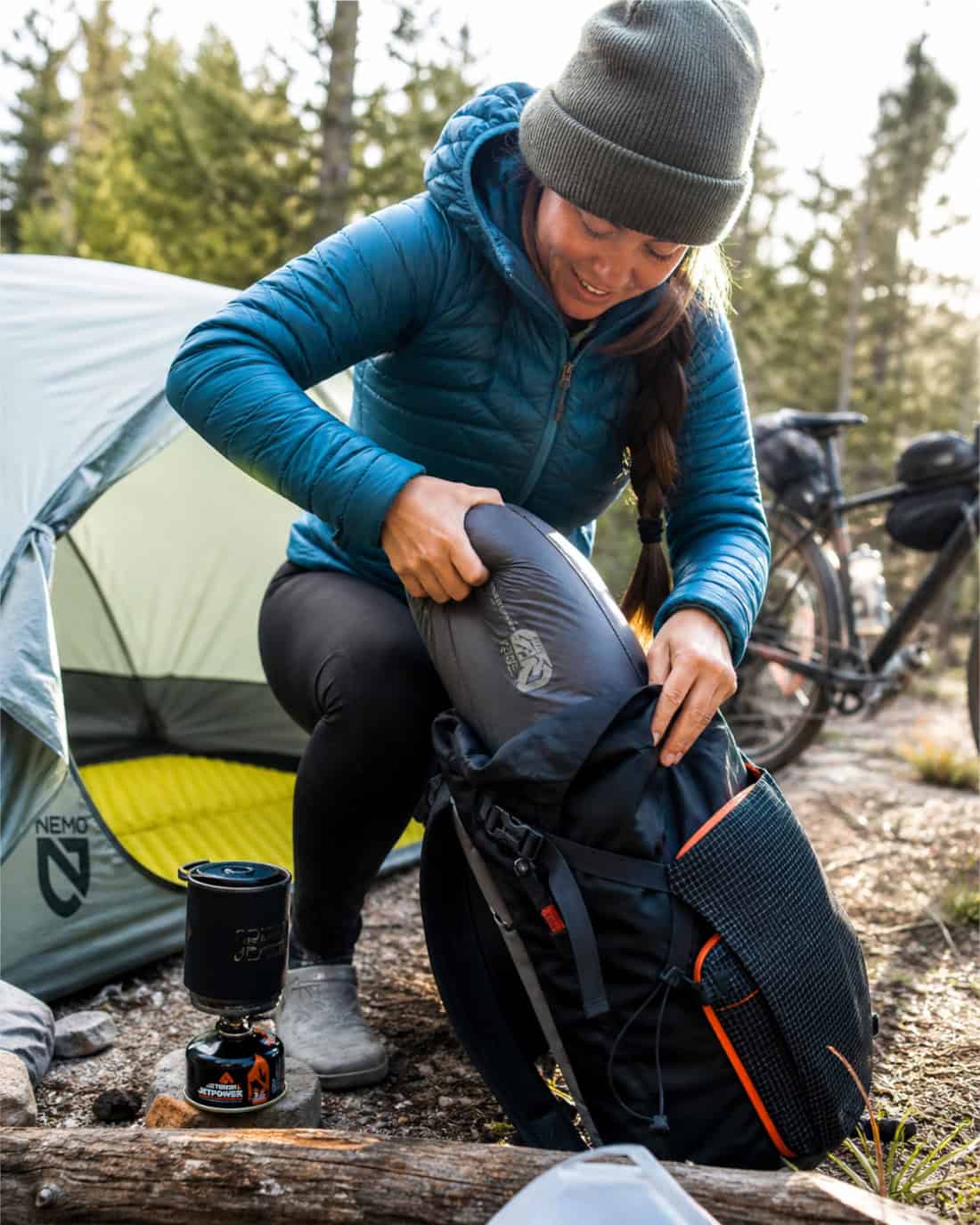
Bikepacking involves compressed packing into small frame bags or handlebar rolls. Pack volume is often the binding constraint. High-fill-power down with a good stuff sack compresses best. Moisture management matters because frame bag storage is near the ground and damp.

Alpine climbing uses the warmest bags relative to weight, typically 850–950 fill-power down in expedition-grade construction with full baffles and high-warmth hoods, paired with bivouac sacks to manage moisture from condensation. Bags for this use are expensive precisely because the weight and warmth tradeoffs are at the extreme end.

Winter camping below freezing requires a sleep system, not just a bag. A bag with a comfort rating at or below the expected nighttime low, a pad with R-5 or higher, insulated clothing worn inside the bag, and appropriate shelter together determine whether the night is safe and comfortable. Choosing a bag rated to -10°F for a trip where lows hit -5°F while using a pad with R-2 will produce a cold and potentially dangerous night even though the bag's label appears adequate.

Wet climates including the Pacific Northwest, UK, coastal ranges, and tropical highlands expose insulation to persistent humidity and frequent precipitation. For regular use in these environments, synthetic fill is safer because it retains meaningful warmth when damp and dries faster. Hydrophobic down narrows the gap but does not close it. If using down in wet conditions, the priority shifts to keeping the insulation dry through shelter design (vestibule space, groundsheet coverage, vapor management) rather than relying on the insulation to perform wet.

Desert camping introduces a different problem: large day-night temperature swings. Daytime temperatures may be 95°F while nighttime drops to 40°F. The bag must handle the cold night, but overheating must also be managed. A vented mummy or a quilt handles this better than a non-venting design.

Family camping with children requires properly sized kids' bags (not adult bags with extra space), durable easy-care construction, and temperature ratings matching where the family actually camps — not the most extreme possible condition. Children are vulnerable to cold and should not use bags that require careful system assembly to achieve rated warmth.


Moisture, Condensation, Shelter Choice, and Drying in the Field

Sleeping inside a tent produces moisture from breathing and perspiration. Over a full night, a sleeping adult exhales approximately 0.5 liters of water vapor. That moisture must go somewhere. In a properly ventilated tent with good airflow and a sealed footprint, most of it vents through the mesh and tent walls. In a closed, unventilated bivy or a non-breathable shelter, it condenses inside, contacting the bag and potentially the insulation.

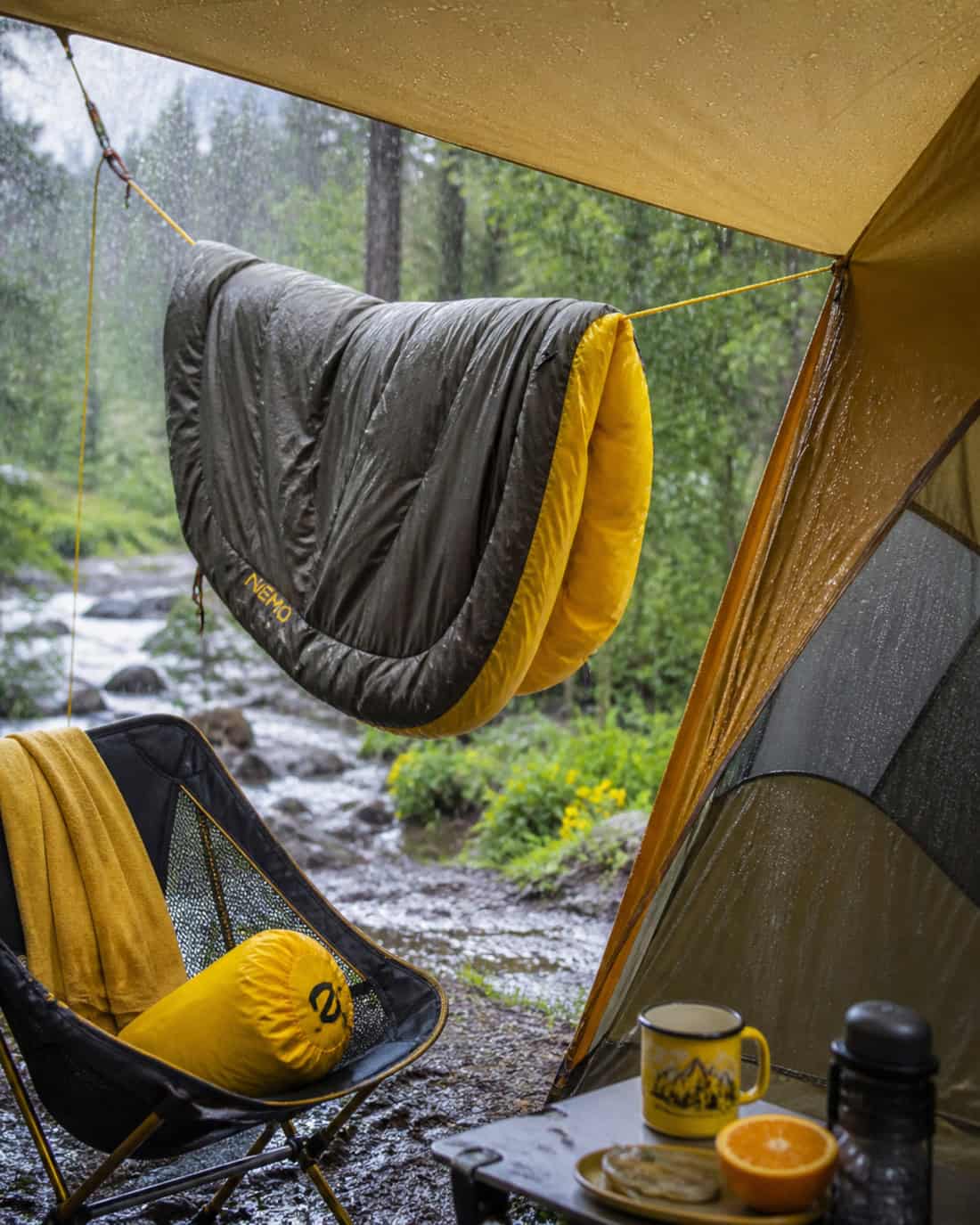
The moisture source most sleeping bag buyers underestimate is not rain — it is cumulative vapor absorption over multiple nights. A down bag that starts the trip with full loft can have measurably reduced loft by night three of a humid trip simply from repeated small moisture exposures that are never fully dried. Airing the bag each morning by turning it inside out and draping it on the tent or a line, even for thirty minutes, removes some of this accumulated moisture.

Synthetic bags handle repeated damp nights more reliably than down because the insulation function does not depend on loft structure. If you consistently camp in humid forests or in shelters with limited ventilation (hammocks, small bivy sacks, non-breathable tarps), the moisture performance difference between synthetic and down becomes operationally significant over a week-long trip.

Field drying down is slow. At 50°F with no wind and full cloud cover, a wet down bag may take an entire day to dry fully. In cold, damp conditions, it may not dry at all before the next night. Synthetic bags dry much faster and can recover useful warmth within a couple of hours of removing bulk moisture.


Weight, Pack Volume, Durability, and Total Sleep System Considerations

The weight printed on the bag's label is the bag alone. Total sleep system weight includes the bag, the pad, the liner (if used), the stuff sack or compression sack, and any external bivy. For backpackers who track pack weight, the full system number matters more than the bag number alone.

Total sleep system weight for a three-season backpacking setup (comfort rating ~30°F) can range from under 2 lbs with ultralight quilts and foam pads to over 5 lbs with budget down bags and heavy inflatable pads. The difference between the high and low end of this range is significant over a week-long trip.

Pack volume is primarily determined by fill power and fill weight. A 900-fill bag with 16 oz of down compresses to roughly the size of a water bottle. A 600-fill bag with the same temperature rating may be twice the volume when compressed. For backpackers with limited pack space or tight bikepack configurations, fill power matters not for warmth but for volume.

Durability varies by shell denier, zipper quality, and baffle construction. A 10D nylon shell bag will snag, scuff, and tear more easily than a 30D shell bag. For users who take bags on rocky canyon trips, use them in rough shelters, or are not careful about keeping bags away from campfire sparks and sharp edges, a heavier shell fabric is a practical choice even at the cost of a few extra ounces. Zipper quality is frequently the first failure in budget bags; a broken zipper on a bag rated for -10°F in a winter camp is a serious problem.

Repairability matters for long-term ownership. Down bags can be repaired by the manufacturer or by specialist shops such as Rainy Pass Repair. Shell tears can be patched with ripstop tape in the field. Down migration between baffles is repairable by careful redistribution and occasional wash. Synthetic insulation that has degraded or shifted cannot be effectively restored; a synthetic bag past its useful insulation life typically requires full replacement.


Hypothermia Risk, Extreme Ratings, and Margin of Safety

The extreme temperature rating on a sleeping bag is a hypothermia-onset number, not a sleep comfort number. Using a bag at its extreme rating means tolerating substantial physiological cold stress. Frostbite can occur at temperatures within the "extreme" range even if hypothermia onset is technically avoided.

Several variables make the rated warmth of a sleep system significantly less reliable in field conditions:

Wet insulation. Even partially damp down loses meaningful warmth. A down bag that feels adequately warm on night one of a trip may feel cold by night three if it has absorbed moisture each night without adequate drying.

Caloric deficit. The body's ability to generate and maintain heat depends on metabolic fuel. After a long day burning 4,000 to 5,000 calories on a challenging mountain route, the body may enter sleep in energy deficit and fail to generate the heat that the ISO test assumes. Eating a calorie-dense snack immediately before sleep — including fat and protein, not just carbohydrates — substantially improves the body's ability to stay warm overnight.

Dehydration. Blood volume decreases with dehydration, reducing heat distribution to extremities. Hands and feet that feel cold despite an adequate torso temperature are often a sign of insufficient hydration.

Fatigue. Accumulated fatigue from multi-day physical effort reduces thermoregulatory efficiency. A bag that felt comfortable on night one of a trip may feel cold by night five at the same ambient temperature.

Altitude. Above approximately 8,000 feet, elevated breathing rate, thicker blood, and reduced circulatory efficiency make extremities harder to keep warm. The same bag that performed adequately at sea level may feel inadequate at altitude for the same air temperature.

The practical safety margin for serious trips in cold or variable conditions is a comfort rating at least 5°C (9°F) below the expected nighttime low, paired with a pad appropriate for the ground temperature and a shelter that protects from wind and precipitation.


Sustainability: Down Sourcing, Recycled Materials, and Long-Term Ownership

Responsible Down Standard (RDS) is a third-party certification developed by The North Face and Allied Feather & Down, now administered by Textile Exchange. It audits the down supply chain from farm to finished product, requiring that birds are not live-plucked, not force-fed, and are treated with basic welfare standards. Brands displaying the RDS logo must carry 100% RDS-certified down. This is the most common ethical down certification in the outdoor industry.

Global Traceable Down Standard (GTDS) is a similar supply chain certification focused on traceability from farm source through production. Both RDS and GTDS ensure that down is a byproduct of the food industry (not specifically farmed for down) and that the sourcing practices meet animal welfare criteria.

Recycled down is harvested from discarded consumer products, typically bedding and old garments, processed, cleaned, and recertified. It performs identically to virgin down of the same fill power and reduces demand for new agricultural down production. Several major brands now offer sleeping bags filled with RDS-certified recycled down.

Recycled synthetic insulation is made from post-consumer polyester, primarily recycled bottles, and has become increasingly common. PrimaLoft, Therm-a-Rest, and others use recycled fibers in synthetic insulation products.

PFC-free DWR treatments are now standard in most premium and mid-range bags. Fluorocarbon-based DWR (PFAS compounds) is associated with environmental persistence and toxicity concerns. Functional PFC-free alternatives exist and are effective for normal camping moisture exposure, though their durability may differ slightly from fluorocarbon formulations.

Lifespan and repairability are sustainability factors that generic guides rarely address. A well-maintained down bag used for thirty years produces substantially less environmental impact than three synthetic bags replaced every eight to ten years. Buying once at higher quality, maintaining the bag properly, and repairing it rather than discarding it are the highest-impact choices an outdoor buyer can make.


How to Wash, Dry, and Store a Sleeping Bag

Body oils, skin cells, sunscreen, and dust accumulate in the insulation over time, bonding the filaments and preventing full loft. A down bag losing loft is often dirty rather than depleted; a proper wash restores loft significantly. The problem is that washing a sleeping bag incorrectly — particularly drying it incorrectly — causes the down to clump into dense, un-loftable masses.

Washing. Use a front-loading washing machine only. Top-loading machines with agitators generate mechanical force that can tear baffles and distribute down unevenly. Use a down-specific cleaner such as Nikwax Down Wash Direct or Grangers Down Wash — not standard laundry detergent, which strips the natural oils from down filaments and degrades the DWR. Wash on a gentle cycle with cold or warm water. Run a second rinse cycle to ensure all soap is removed; soap residue prevents down from lofting. Gently support the full weight of the bag when removing it from the machine — the wet bag is heavy and unsupported lifting strains baffles.

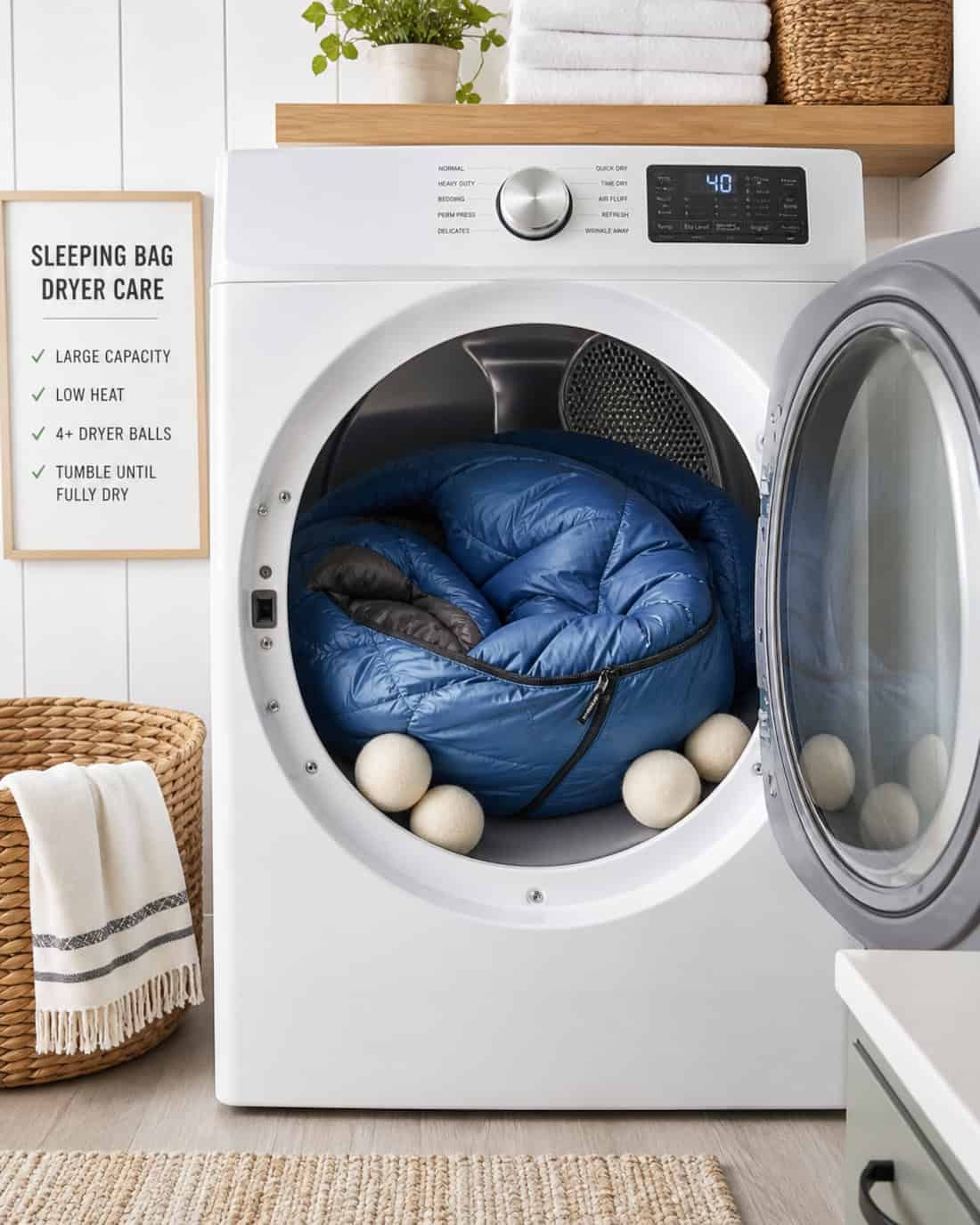
Drying. This is the critical step. Use a large-capacity dryer (commercial size at a laundromat is ideal) on the lowest available heat setting. High heat can melt technical fabrics and damage the DWR. Add two or three clean tennis balls or dryer balls to break up down clumps as they form. Check the bag periodically and gently massage any clumps by hand. Expect the drying process to take several hours — often three to four hours for a premium down bag. The bag may appear dry on the outside while the inner fill is still damp. The "lump test" — feeling for hard dense nodes inside the fill — confirms whether down is still wet. Do not store the bag until all down feels soft and evenly distributed.

Synthetic bags wash similarly but dry faster (one to two hours) and are more tolerant of slightly higher heat.

Storage. Never store a sleeping bag compressed in its stuff sack for long periods. Permanent compression deforms and weakens the down clusters over months, causing irreversible loft loss. Store the bag loosely in the large mesh or cotton storage sack that typically ships with the bag, or spread it on a shelf or in a large pillowcase. Store in a cool, dry location away from direct sunlight. UV exposure degrades nylon and down over time. Before each trip, decompress the bag for several hours before use to allow it to reach full loft.

After each field trip, air the bag inside-out in a ventilated location before packing for home or storage. Even if the bag feels dry, moisture absorbed from breathing accumulates overnight and should not remain trapped in the insulation for the storage period.


Common Wrong-Purchase Scenarios

Situation The Mistake The Consequence
Bought a 20°F limit bag for 20°F camping Used limit rating as comfort rating; cold sleeper Woke cold; limit rating assumes curled posture and warm sleeper
20°F bag, R-2 pad, 20°F night Ignored pad dependency Cold from ground; ISO test assumes R-5.38 pad
30°F bag for shoulder-season mountain camping Underestimated temperature swings and altitude Unexpectedly cold night at elevation
Down bag for 5-night rainy Pacific Northwest trip Ignored moisture risk Cumulative loft loss by night 3; cold sleep on last two nights
Narrow mummy bag, broad shoulders, side sleeper Did not check shoulder girth Compressed shoulder insulation created persistent cold spot
Bag too long for user height Prioritized "roomy" feel Footbox air pocket required body to heat excess volume; cold feet
Budget bag, unverified temperature claim No ISO certification True comfort threshold significantly higher than labeled
Stored compressed for one year Did not use storage sack Permanent partial loft loss; bag felt cold even after washing
Bought warmer bag to solve cold problem Didn't diagnose pad inadequacy Spent more money; problem persisted
Child using adult bag Oversized fit Excess dead-air volume; child too cold despite adequate bag rating

When a Warmer Bag Is Not the Answer

Buying a warmer sleeping bag is not always the correct response to sleeping cold. Before upgrading the bag, diagnose the actual source of the problem.

Upgrade the pad first if ground cold is the issue. If you consistently feel cold from below — cold hips and back, cold through the sleeping surface — the pad R-value is the problem. Moving from an R-2 to an R-4 pad can make a more dramatic difference than upgrading from a 30°F to a 15°F bag, at significantly lower cost.

Add a liner if you need 5–15°F of extra warmth on occasional cold nights. A quality sleeping bag liner such as a silk mummy liner adds approximately 5–10°F of effective warmth and washes easily. This extends the useful range of a bag you already own at a fraction of the cost of a new bag.

Address shelter ventilation if condensation is wetting the insulation. If your bag feels colder after each successive night of a multi-day trip, condensation accumulation is likely the cause. Better tent ventilation, a groundsheet that prevents ground moisture from rising into the bag, and morning airing practices address this without replacing the bag.

Wear insulated clothing to bed. A merino or synthetic base layer adds 5–10°F of warmth to the sleep system. A down sweater worn inside the bag can add 10–15°F. This is particularly relevant for trips where you already carry insulated clothing for active use — the clothing doubles as sleep-system augmentation.

Change the shelter before changing the bag. A tarp or bivy without wind protection allows cold air movement across the bag surface, degrading its performance. A tent with adequate wind protection and vestibule coverage holds warmth more effectively than a bag upgrade in exposed conditions.


Pre-Purchase Checklist

Before buying, confirm:

  1. ISO comfort and limit ratings are both listed, and you know which one applies to your sleep temperature pattern.
  2. The bag's ISO test pad R-value assumption (approximately R-5.38) is matched or exceeded by your actual pad.
  3. The insulation type matches your expected moisture exposure: down for dry conditions with weight priority; synthetic or hydrophobic down for persistently wet conditions.
  4. The shoulder girth accommodates your shoulders without compressing insulation when you sleep on your side.
  5. The length matches your height, with the footbox not pressing against your feet when you extend fully.
  6. Fill power and fill weight are both stated, not just fill power.
  7. The bag's bag-name temperature matches the ISO number — if not, look up the actual ISO ratings in the specs.
  8. The baffle construction is appropriate for the rating: box-wall, trapezoidal, or V-tube for bags rated below 32°F; sewn-through acceptable only above 40°F.
  9. Hood, draft collar, and draft tube design match the intended temperature range.
  10. Ethical certifications for down (RDS or GTDS) if sourcing matters to you.
  11. Storage sack included or available; compression sack for travel packing only.

Decision Workflow Summary

Step 1. Identify the coldest expected nighttime temperature and subtract a safety margin of at least 5°C (9°F) for mountain environments, unpredictable weather, or high altitude.

Step 2. Determine whether you are a cold, average, or warm sleeper. Cold sleepers use the comfort rating as the target. Warm sleepers can use the limit rating.

Step 3. Confirm your sleeping pad R-value. Adjust the effective sleep-system temperature for your pad relative to the ISO test's R-5.38 assumption.

Step 4. Assess moisture risk. Sustained wet conditions or poor shelter ventilation push toward synthetic or hydrophobic down.

Step 5. Choose bag shape based on how you sleep: mummy for cold efficiency, semi-rectangular for side sleepers and restless sleepers, quilt for light and ventilating use, rectangular for car camping comfort.

Step 6. Check shoulder girth, length, and hip width against your actual body measurements.

Step 7. Evaluate fill power and fill weight together to understand warmth-per-gram performance at the total trip weight budget you need.

Step 8. Verify ISO certification, fill power source (duck vs goose, virgin vs recycled), ethical certification, and included storage sack.

Step 9. If the problem you are solving is cold sleep from a bag you already own, diagnose whether pad R-value, moisture, fit, or insufficient body heat input is the actual cause before buying a new bag.


Sleep & Home Comfort Resources

References